How To Choose Mountain Bike Trails: What Beginners Should Know About Difficulty, Terrain, And Safety

How To Choose Cruiser Bike Accessories: Must Have Gear for Comfortable and Safer Rides.

How to Find the Best All-in-One Fishing Lure Kit
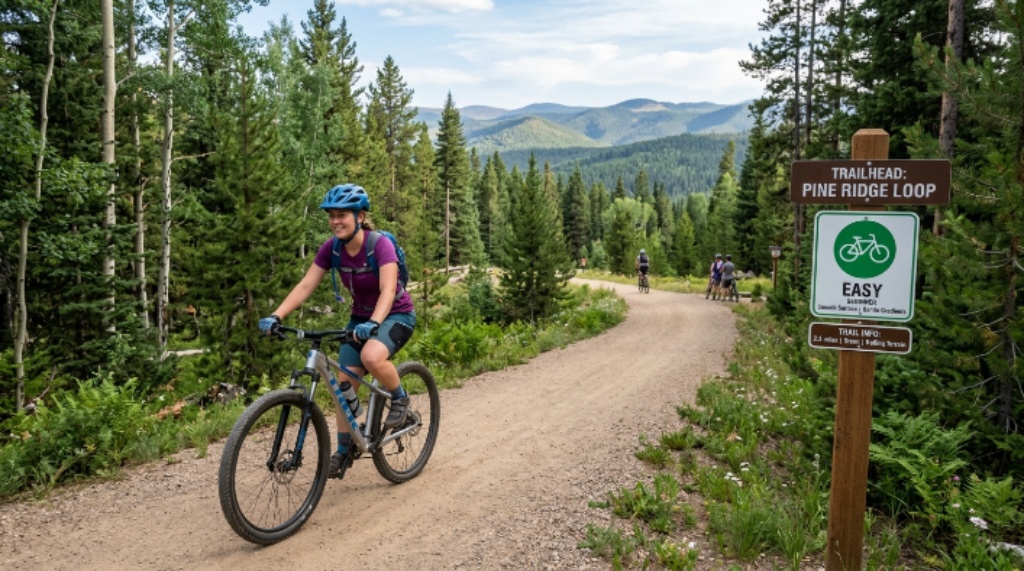
To choose a mountain bike trail, match its difficulty, terrain, distance, and hazards with your current skills. Beginners should start with easier trails, study the route beforehand, and increase difficulty only after gaining control and confidence. Mountain biking rewards good judgment as much as fitness or technical skill. In fact, trail selection can determine whether your first rides feel enjoyable or unnecessarily intimidating. More than 1,100 bicyclists died in traffic crashes across the United States in 2024, although mountain bike trails present a different risk environment. Trail ratings also commonly progress from green to blue, black, and double black as terrain becomes more demanding.
Start With Your Actual Riding Ability
The best trail for a beginner is not necessarily the shortest trail. Instead, look for a route that challenges you without forcing repeated crashes, panic braking, or difficult dismounts.
Your riding ability depends on several factors:
- Bike control
- Braking technique
- Climbing ability
- Descending confidence
- Cornering skills
- Balance
- Fitness
- Experience with obstacles
- Comfort on uneven surfaces
A rider with strong road cycling fitness may still struggle on technical singletrack. Conversely, someone with limited endurance may handle technical features well but tire quickly on long climbs.
Therefore, judge your readiness by control rather than speed. You should feel comfortable slowing down, stopping, turning, and changing direction before moving toward harder terrain.
Understand Mountain Bike Trail Ratings
Trail ratings give beginners a useful starting point, but they never tell the entire story. Different trail systems can apply ratings somewhat differently, so always read the local descriptions.
Green Trails
Green trails generally suit beginners who are learning mountain bike handling. They usually offer wider paths, moderate grades, and fewer technical obstacles.
However, a green trail can still contain roots, rocks, mud, narrow sections, or steep moments. Before riding, check the route description and recent conditions.
Green trails work particularly well for learning:
- Controlled braking
- Basic cornering
- Body positioning
- Smooth pedaling
- Safe obstacle avoidance
- Trail awareness
If you can complete green routes while maintaining control, you have a solid foundation for progression.
Blue Trails
Blue trails usually introduce more technical terrain and greater physical demands. You may encounter tighter turns, steeper climbs, loose surfaces, rock sections, and larger obstacles.
Therefore, beginners should approach blue trails selectively. A short blue trail may suit an improving rider better than a long, demanding green route.
Read the trail description before assuming every blue route offers the same experience. Difficulty depends heavily on local terrain, construction, weather, and maintenance.
Black And Double Black Trails
Black and double black trails demand advanced skills, strong judgment, and reliable bike control. These routes can include steep descents, exposed sections, large rocks, drops, jumps, and technical features.
Beginners should generally avoid these trails until they develop substantial experience. Walking a difficult feature does not make the trail easy, especially when several demanding sections appear together.
Look Beyond The Color Rating
Trail color provides only one piece of useful information. Distance, elevation gain, surface conditions, exposure, and technical features can change your experience dramatically.
For example, a five mile trail with modest climbing may feel easier than a two mile route with constant steep sections. Similarly, smooth dirt can feel predictable while wet roots can create sudden traction problems.
Before leaving, examine these factors:
- Total distance
- Elevation gain
- Maximum climb
- Descent length
- Trail width
- Surface type
- Technical features
- Exposure
- Water crossings
- Bailout options
- Recent trail conditions
This approach gives you a much clearer picture than trail color alone.
Evaluate The Terrain Before You Ride
Terrain affects both difficulty and decision making. Beginners often focus on hills while overlooking surface changes that can cause sudden loss of control.
Roots And Rocks
Roots and rocks require controlled weight shifts and careful line selection. Wet roots can become especially slippery, while loose rocks can move beneath your tires.
Start slowly and keep your eyes ahead of the front wheel. Let the bike move beneath you instead of fighting every small movement.
Loose Dirt And Gravel
Loose surfaces reduce traction during braking and cornering. Consequently, aggressive braking or sudden steering can cause the tires to slide.
Use smoother inputs and maintain a controlled speed. Keep your body relaxed while allowing the bike to follow the terrain.
Mud And Wet Trails
Mud can dramatically change trail behavior. Tires may lose grip, braking distances can increase, and deep ruts can make steering unpredictable.
Additionally, riding muddy trails can damage some trail surfaces. Check local conditions before riding and follow closures whenever trail managers request them.
Sand
Deep sand can make steering difficult and quickly drain your energy. Keep your weight balanced and avoid sharp steering movements.
If the sand becomes too deep, walking can be safer than forcing the bike forward. A short walk is better than an avoidable crash.
Pay Attention To Elevation Gain
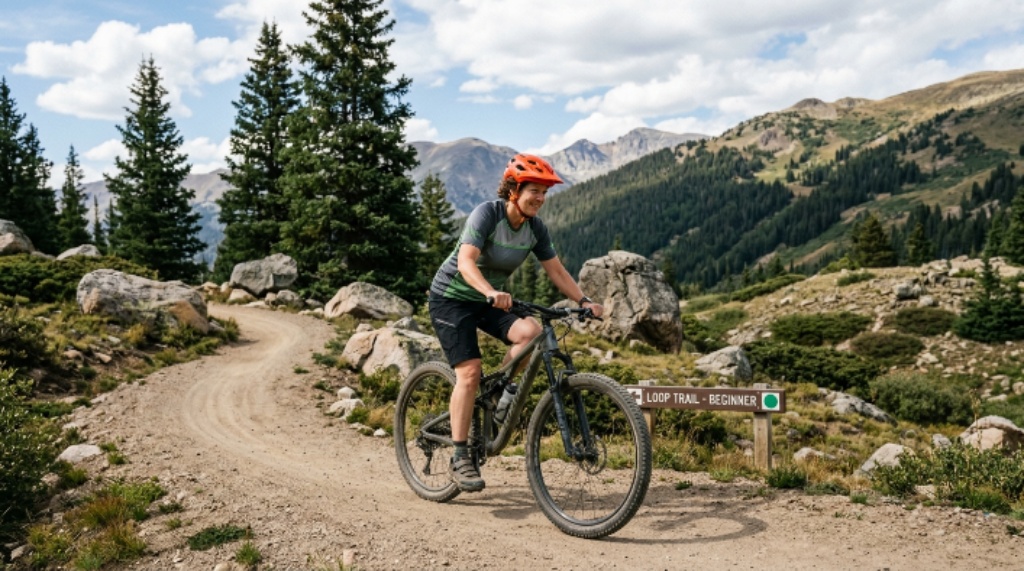
Distance alone cannot tell you how difficult a mountain bike trail will feel. Elevation gain often determines how much physical effort your ride requires.
A beginner may comfortably ride six miles on rolling terrain. That same rider could struggle on four miles containing several steep climbs.
Before starting, consider:
- Total elevation gain
- Steepest climbing sections
- Length of sustained climbs
- Recovery opportunities
- Descent difficulty
- Your current fitness
Choose routes that leave enough energy for the return portion. Fatigue can reduce concentration and make technical riding much harder.
Study The Trail Map First
A few minutes of planning can prevent hours of unnecessary difficulty. Before riding, examine the map and understand where the trail starts, finishes, climbs, descends, and intersects.
Look for junctions and possible bailout routes. Also identify nearby roads, parking areas, restrooms, water sources, and emergency access points.
If the trail system offers directional riding, follow the designated direction. Riding against traffic can create unnecessary collision risks on narrow sections.
Check Recent Trail Conditions
A trail can change significantly after rain, storms, maintenance, or heavy use. Therefore, an old description may not accurately represent today’s conditions.
Check the trail system’s current status before departure. Look for closures, construction notices, weather concerns, flooding, fallen trees, or unusual hazards.
Local riding communities can also provide useful observations. However, treat unofficial reports as supplemental information rather than guaranteed trail conditions.
Match The Trail To Your Bike
Your mountain bike also affects which trails make sense. A lightweight cross country bike may perform differently from a trail bike designed for technical terrain.
Consider:
- Suspension travel
- Tire width
- Tire tread
- Brake performance
- Wheel size
- Bike fit
- Gear range
- Overall bike condition
A capable bike does not replace riding skill. However, the right setup can make appropriate terrain more predictable and manageable.
Before every ride, inspect the brakes, tires, wheels, drivetrain, and suspension. A mechanically sound bike gives you more confidence when conditions become difficult.
Use A Simple Trail Selection Formula
Beginners can simplify trail decisions by rating four areas before every ride. Consider skill, terrain, distance, and conditions separately.
Use this quick test:
- Skill: Can you control your bike on similar terrain?
- Terrain: Do you understand the major surfaces and obstacles?
- Distance: Can you comfortably complete the route?
- Conditions: Are weather and trail conditions suitable?
If one category looks significantly harder than your experience, choose an easier route. This method prevents one attractive trail feature from overshadowing the overall difficulty.
Know Your Comfort Level With Exposure
Exposure deserves special attention because it can affect riders differently. A narrow trail beside a steep drop may feel much harder than its technical rating suggests.
You do not need to prove anything on a mountain bike. If exposure makes you uncomfortable, slow down or choose another route.
Similarly, never assume you must ride every feature. Experienced riders regularly inspect difficult sections and decide whether riding or walking makes more sense.
Learn Basic Mountain Bike Safety
Good safety habits begin before you enter the trail. Wear a properly fitted bicycle helmet that meets applicable safety standards.
Your helmet should sit level, remain secure, and avoid interfering with your vision. Replace it after a serious impact or when its condition no longer provides reliable protection.
Also carry essential equipment:
- Water
- Basic repair tools
- Spare tube or tubeless repair supplies
- Pump or inflation device
- Tire levers
- Identification
- Charged phone
- Small first aid kit
- Weather appropriate clothing
For longer or remote rides, consider carrying additional food and emergency supplies. Preparation matters more when help may take longer to reach you.
Never Ignore Weather
Weather can change trail difficulty faster than almost any other factor. Rain can turn manageable dirt into slippery terrain within minutes.
Heat also affects judgment and endurance. During hot conditions, carry enough water and avoid starting demanding routes without considering your recovery needs.
Lightning, heavy storms, extreme temperatures, and rapidly changing conditions deserve serious attention. When conditions deteriorate, turning around is often the smartest decision.
Ride With Someone When Appropriate
Solo riding offers freedom, but remote trails create additional challenges. A mechanical failure or crash can become much more serious when nobody knows your location.
Beginners should consider riding with an experienced partner whenever practical. A knowledgeable rider can also demonstrate braking, cornering, climbing, and obstacle techniques.
If you ride alone, tell someone where you are going and when you expect to return. Keep your phone charged and know whether your route has reliable coverage.
Practice Skills Before Increasing Difficulty
Trail progression works best when you improve specific skills before seeking harder terrain. You do not need to learn everything during one ride.
Practice braking on gentle slopes first. Then work on controlled cornering, climbing, descending, and riding over small obstacles.
As your skills improve, increase only one difficulty factor at a time. For example, add technical terrain without dramatically increasing distance during the same ride.
Learn How To Handle Common Trail Features
Mountain bike trails often include features that look intimidating at first. Learning their basic approach can make them easier to assess.
Tight Turns
Slow before the turn rather than braking heavily inside it. Look through the corner and keep your movements smooth.
Steep Descents
Lower your speed before entering the descent. Keep your body balanced, maintain controlled braking, and avoid locking either wheel.
Small Rocks
Relax your arms and maintain a steady line. Look beyond the obstacle instead of staring directly at it.
Roots
Cross roots with controlled speed and smooth steering. Wet roots require extra caution because traction can disappear quickly.
Short Climbs
Shift before the climb becomes steep. Maintain steady cadence and avoid wasting energy with sudden acceleration.
Respect Trail Etiquette
Trail etiquette protects everyone using shared outdoor spaces. Follow posted rules, respect closures, and yield according to local trail guidance.
Control your speed around blind corners and busy sections. Announce your presence when appropriate, especially when approaching other trail users from behind.
Stay on designated trails rather than creating shortcuts. Shortcuts can damage vegetation, increase erosion, and change how future riders experience the route.
Build A Beginner Progression Plan
A structured progression can help you improve without unnecessary risk. Start with familiar green terrain and repeat routes until your movements become consistent.
Next, introduce slightly longer rides with modest elevation. After that, add selected blue sections when you can handle similar features confidently.
A useful progression might look like this:
- Stage 1: Wide green trails with gentle grades
- Stage 2: Longer green routes with moderate climbing
- Stage 3: Green trails containing roots and rocks
- Stage 4: Short blue sections with manageable features
- Stage 5: Longer blue routes after consistent control
- Stage 6: Advanced terrain after substantial experience
Progress based on skill, not impatience. Your goal should involve better control rather than simply collecting harder trail ratings.
Common Trail Selection Mistakes
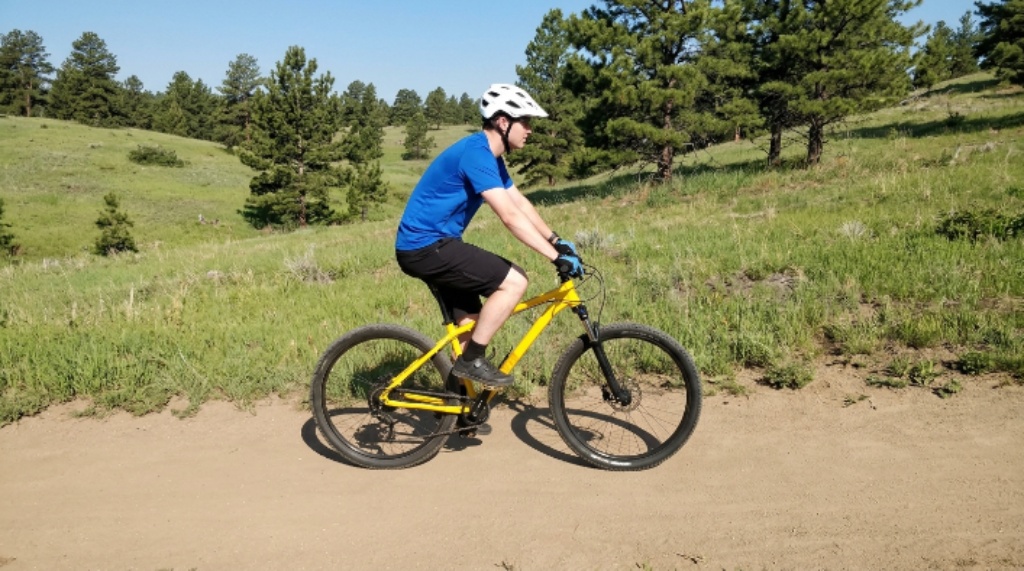
Beginners often make predictable mistakes when selecting mountain bike trails. Avoiding them can make your learning curve much smoother.
Mistake 1: Choosing By Distance Alone
A short route can contain extremely demanding terrain. Always consider elevation, obstacles, surface conditions, and exposure.
Mistake 2: Trusting Trail Color Completely
Ratings provide guidance rather than guarantees. Read local descriptions and inspect the route’s specific characteristics.
Mistake 3: Ignoring Weather
Wet, icy, or extremely hot conditions can dramatically change a familiar route. Check conditions before starting.
Mistake 4: Starting Too Hard
An ambitious first ride can create fatigue, fear, and poor technique. Start comfortably and build difficulty gradually.
Mistake 5: Forgetting The Return Trip
A route that feels easy early may become difficult after several climbs. Reserve enough energy for the entire outing.
A Five Minute Pre Ride Checklist
Before leaving the parking area, perform one final review. This simple habit can catch problems before they become serious.
Check these five areas:
- Bike: Test brakes, tires, gears, and wheels.
- Body: Confirm hydration, food, clothing, and protective equipment.
- Route: Review distance, elevation, exits, and major features.
- Conditions: Check weather, trail status, and surface conditions.
- Communication: Carry a charged phone and share your plan.
This checklist takes little time but creates a much stronger safety margin. It also helps you start the ride with a clear plan.
When Should Beginners Move To Harder Trails?
Move upward when your current trails feel controlled rather than merely survivable. You should handle braking, cornering, climbing, and descending without constant panic or mistakes.
You should also finish your rides with enough energy to maintain good technique. If fatigue regularly causes poor decisions, increase fitness before increasing trail difficulty.
Most importantly, repeat difficult sections until you understand them. Confidence should come from consistent skill, not from forcing yourself through uncomfortable situations.
How To Choose Your Next Mountain Bike Trail
The best trail creates a useful challenge without overwhelming your current abilities. Start by checking the rating, then examine terrain, elevation, distance, conditions, and exposure.
Next, compare those factors with your actual riding skills. Finally, consider your bike, available safety equipment, weather, and whether someone knows your riding plan.
When those pieces align, your trail choice becomes much more predictable. You can then focus on improving technique, enjoying the landscape, and building experience naturally.
Frequently Asked Questions
What trail rating should beginners start with?
Beginners should generally start with green trails that match their fitness, control, and comfort level.
How difficult is a blue mountain bike trail?
Blue trails typically require more technical skill and physical control than green trails, but difficulty varies between trail systems.
Is trail distance important when choosing a route?
Yes, because longer routes increase fatigue and can make otherwise manageable terrain harder to control.
Should beginners ride mountain bike trails alone?
Beginners should preferably ride with others, especially on unfamiliar or remote trails where assistance may take longer.
What should I check before riding a mountain bike trail?
Check the rating, terrain, distance, elevation, weather, trail conditions, closures, equipment, and emergency access.
Conclusion
Choosing mountain bike trails becomes easier when you stop judging routes by color alone. Evaluate difficulty, terrain, elevation, distance, conditions, exposure, and your current riding skills together.
Start with manageable trails and increase difficulty gradually as your control improves. Most importantly, treat safety and good judgment as essential riding skills rather than optional precautions.
Before your next ride, study the route, inspect your bike, check conditions, and tell someone your plans. Then ride within your ability, learn from every outing, and progress when your skills genuinely support the next challenge.