Telescopic vs. Two-Piece Fishing Rods: What’s the Difference?

How to Think About Exfoliation in a Modern Skincare Routine

Why Gen Z Is Redefining Traditional Beauty Standards
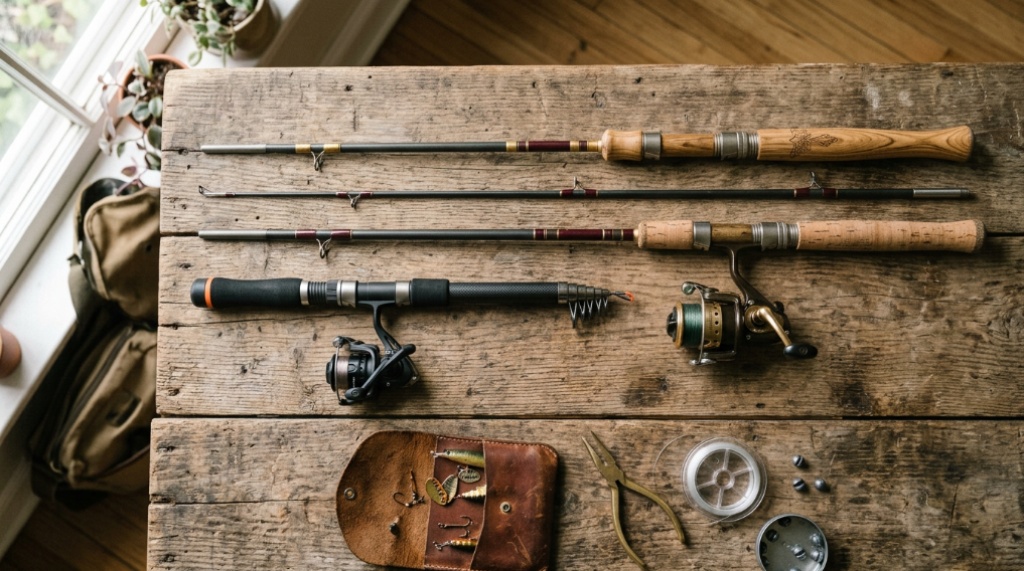
Picture the moment you’re packing for a quick weekend trip: your tackle bag fits fine, but a one-piece rod won’t. That’s the exact problem telescopic and two-piece rods were designed to solve — though they solve it in very different ways. If you’re weighing portability against performance, or you’ve been reading a complete review of the Plusinno carbon fiber fishing combo and wondering why it uses a multi-piece design, the distinction matters. Here’s how telescopic and two-piece rods actually differ, and which one fits your fishing.
Quick Answer
A telescopic rod collapses into itself like a collapsible antenna, shrinking to a very short packed length with no separate pieces to lose. A two-piece rod separates at one ferrule joint into two sections, packing to roughly half its assembled length. Telescopic rods win on portability and convenience; two-piece rods generally win on sensitivity, casting feel, and durability because they have fewer moving joints and a cleaner blank taper. Neither is universally better — the right pick depends on how you travel and how much performance you need.
Key Takeaways
- Telescopic rods collapse internally and pack shortest, but the multiple sliding sections reduce sensitivity and can loosen over time.
- Two-piece rods split at a single ferrule, giving better casting feel and a more consistent bend curve than most telescopic designs.
- Ferrules on two-piece rods need to be seated firmly and aligned; a loose joint is the most common cause of poor performance.
- For backpacking, motorcycle travel, or emergency kits, a telescopic rod’s compact size often outweighs its performance trade-offs.
- For everyday bank, boat, or pier fishing where a rod sleeve fits, a two-piece rod is usually the more versatile long-term choice.
How Telescopic Rods Work
A telescopic rod uses nested tubular sections that slide inside one another, similar to a collapsible hiking pole or a car antenna. When extended, each section locks into the one above it, usually by friction or a twist-lock mechanism. When collapsed, the entire rod retracts into the handle, often packing down to somewhere in the range of a foot or two depending on the model.
The appeal is obvious: no separate pieces, no ferrule to misplace, and a packed size small enough to fit in a backpack, a saddlebag, or even a glovebox. Setup takes seconds — you pull the tip section out, extend each segment, and twist or push to lock.
The trade-off is structural. Every sliding joint creates a slight discontinuity in the rod’s bend curve, and those joints add weight compared to a solid blank of the same length. More importantly, each connection point is a place where energy from your cast and from a fish’s bite gets absorbed rather than transmitted. That’s why telescopic rods tend to feel softer and less crisp than comparable one-piece or two-piece rods.
Where telescopic rods shine
They’re genuinely excellent for situations where packing size is the dominant constraint. Think hiking into a remote alpine lake, keeping a rod in a vehicle for spontaneous trips, traveling by motorcycle or bicycle, or stashing a backup rod in a small emergency kit. They’re also popular with casual anglers who fish occasionally and want something that lives in a closet without taking up space.
Where they fall short
Sensitivity is the biggest limitation. If you’re fishing soft plastics on a Texas rig, jigging for walleye, or trying to feel the difference between a rock and a subtle tap, a telescopic rod’s dampened feel works against you. The joints can also loosen with use, and grit or sand in the sliding sections can cause sticking or scratching over time. Cheap telescopic rods in particular have a reputation for breaking at the joints under load.
How Two-Piece Rods Work
A two-piece rod breaks down at a single ferrule — the joint where the upper section slides over or into the lower section. That’s it. You separate the rod into two halves for transport and join them before fishing. Most rods in this category pack to roughly 50–60% of their assembled length, which means a 7-foot rod might pack to around 3.5 to 4 feet.
The ferrule is the critical component. On most modern rods it’s either a spigot ferrule (a smaller plug section that fits into the hollow ends of both halves) or a simple overlap ferrule where the top section slides into the butt section. When properly seated, a good ferrule transmits energy almost as well as a one-piece blank, which is why two-piece rods dominate the mid-range market, If you enjoy customizing your gear, check out our guide on how to build a custom fishing rod from a kit.
Why two-piece rods usually outperform telescopic models
Three reasons: fewer joints, a cleaner taper, and better material continuity. With only one connection point, the rod’s bend curve stays smoother under load. The blank can be designed with a more consistent action because the manufacturer isn’t working around multiple sliding sections. And the ferrule, when made well, adds minimal weight and minimal deadening.
The result is a rod that casts more predictably, feels bites more clearly, and generally holds up better to repeated use. That’s why you’ll find two-piece rods across almost every category — bass rods, surf rods, trout rods, and travel rods alike.
The ferrule problem
Ferrules aren’t perfect. They can loosen during fishing, especially with repeated casting, and a loose ferrule creates a clicking sensation and robs casting distance. They need to be kept clean — sand or grit in the joint can score the blank. And if you don’t align the guides properly when joining the sections, your line will run off-axis, hurting accuracy.
The fix is simple: seat the ferrule firmly with a slight twist, check it periodically, and keep the joint clean. Wax or ferrule lubricant helps on older rods.

Telescopic vs. Two-Piece: Direct Comparison
| Factor | Telescopic Rod | Two-Piece Rod |
|---|---|---|
| Packed length | Very short (often 12–24 inches) | Roughly half of assembled length |
| Number of joints | Multiple sliding sections | One ferrule |
| Sensitivity | Lower — energy lost at joints | Higher — cleaner energy transfer |
| Casting feel | Softer, less crisp | Closer to one-piece performance |
| Setup time | Fast, but multiple locks to check | Very fast — one joint |
| Durability | Joint wear, grit sensitivity | Ferrule wear if neglected |
| Best for | Travel, backpacking, emergency kits | Everyday fishing, most situations |
Which One Should You Actually Buy?
The honest answer is that most anglers are better served by a two-piece rod, and most anglers who think they need a telescopic rod actually need a good travel rod instead.
Choose a telescopic rod if:
- Packed size is your hard constraint — you’re hiking, biking, or flying with minimal luggage
- You fish occasionally and want something that lives in a car or closet
- You’re buying a backup or emergency rod
- You’re fishing light species where subtle bite detection matters less
Choose a two-piece rod if:
- You fish regularly and want the best performance per dollar
- You need real sensitivity for finesse techniques
- You’re targeting larger or harder-fighting fish
- You have any reasonable way to transport a rod around 3–4 feet long
There’s also a third option worth knowing about: three-piece and four-piece travel rods. These split into more sections than a two-piece but use proper ferrules rather than sliding joints, so they pack nearly as small as a telescopic rod while retaining much better performance. If you were drawn to telescopic rods purely for portability, a multi-piece travel rod is often the smarter compromise.
Common Mistakes to Avoid
Buying a telescopic rod for finesse fishing is the most common error. If your technique depends on feeling a subtle tick, a telescopic rod will frustrate you. The second most common mistake is failing to seat a two-piece ferrule firmly — a half-seated joint feels vague and can crack the blank under load. Third, many anglers never clean their ferrules or telescopic sections, then wonder why the rod starts sticking or clicking after a season of beach or river use. A quick wipe with a dry cloth after each trip prevents most of these problems.
Frequently Asked Questions
Are telescopic fishing rods as strong as two-piece rods?
Generally no. The multiple joints in a telescopic rod create stress points, and cheap models in particular can fail at the locks under heavy load. Well-made telescopic rods can handle normal freshwater fishing, but for larger fish or heavy casting, a two-piece rod is more reliable.
Can you leave a two-piece rod assembled?
You can, and many anglers do for short periods, but storing a rod assembled for long stretches — especially in a hot car — can cause the blank to take a set (a permanent curve). It’s better to break it down between trips.
Do telescopic rods cast as far as two-piece rods?
Usually not as far. The joints absorb some casting energy, and the softer action means less efficient load transfer. A skilled caster can close the gap, but with the same technique, a two-piece rod typically casts farther and more accurately.
Is a three-piece rod better than a telescopic rod?
For most anglers, yes. A three-piece travel rod packs small but uses proper ferrules, so it retains much better sensitivity and casting feel. It’s the better choice if you want portability without giving up performance.
What’s the best rod for backpacking?
A four-piece or five-piece travel rod is usually the best balance of packability and performance. A telescopic rod packs smaller still, but only makes sense if every inch of packed length truly matters or if you’re fishing casually.
How do I keep a two-piece ferrule from loosening?
Seat it firmly with a slight twist before fishing, check it after a few casts, and keep the joint clean and dry. A small amount of ferrule wax helps on older rods. Avoid over-tightening, which can crack the female end of the ferrule.
Conclusion
Telescopic rods trade performance for extreme portability, while two-piece rods deliver better sensitivity and casting feel at the cost of a slightly longer packed length. For most fishing situations — bank, boat, pier, or surf — a two-piece rod is the more versatile and durable choice. Reach for a telescopic rod when packed size is the deciding factor, and consider a multi-piece travel rod if you want the best of both worlds. Match the rod to how you actually fish, not to how you imagine you might.