
How to Think About Exfoliation in a Modern Skincare Routine

Vehicle History Report Checklist: 25 Red Flags to Look for Before Buying a Used Car
September 22, 2026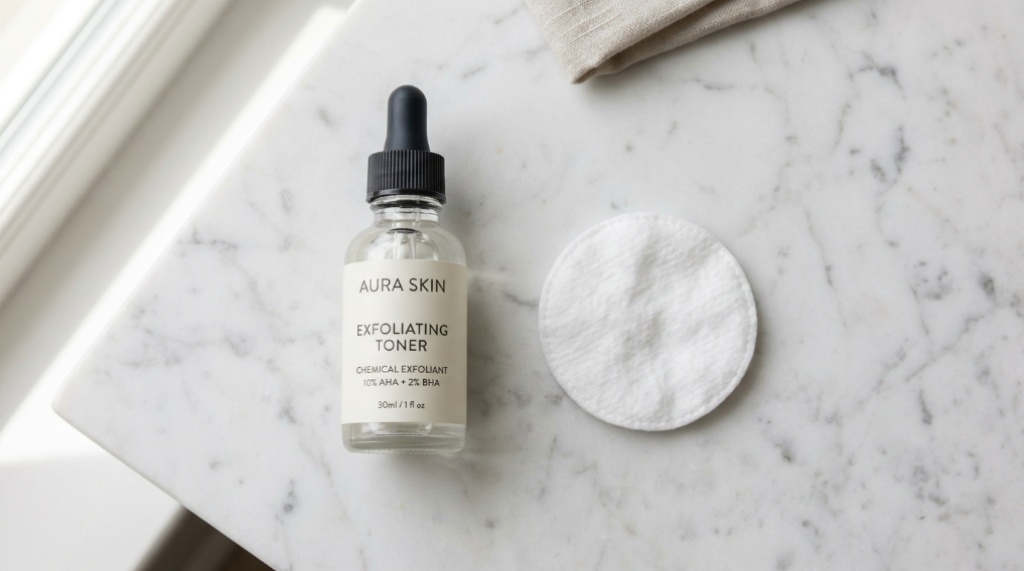
Most people who move to a big city notice the same thing within a few months: their skin starts behaving differently. Central heating, subway grime, recycled office air, long commutes in heavy makeup — the environment changes faster than most routines do. That is usually when exfoliation enters the conversation, and often when it goes wrong. The mistake is rarely the product itself. It is treating exfoliation as a step to add rather than a system to balance. If you are incorporating glycolic acid toner into an urban skincare routine, the difference between glowing skin and a compromised barrier comes down to frequency, timing, and what you pair it with.
Quick Answer
Exfoliation works best as a controlled, scheduled step — not a daily habit. For most people, chemical exfoliation two to three times per week is enough. Glycolic acid toner, an AHA, is best used at night on clean, dry skin, followed by moisturizer and sunscreen the next morning. If your skin is sensitive, reactive, or already using retinoids, start once a week and build up slowly. Stop immediately if you get stinging, flaking, or persistent redness.
Key Takeaways
- Exfoliation is about frequency and timing more than product strength — over-exfoliation causes more damage than under-exfoliation.
- Glycolic acid is an AHA that works on the skin’s surface; it increases sun sensitivity, so daily sunscreen becomes non-negotiable.
- Do not layer glycolic acid with retinoids, benzoyl peroxide, or vitamin C in the same routine step unless you have built tolerance and know your skin well.
- Urban environmental stress (pollution, humidity shifts, indoor heating) can make skin more reactive, so adjust frequency seasonally rather than sticking to a fixed schedule.
- If your skin is stinging, tight, or flaking, that is a signal to pause — not to push through.
What Exfoliation Actually Does and What It Doesn’t
Exfoliation removes dead cells from the outermost layer of skin, the stratum corneum. That layer is not waste; it is a barrier that holds in water and keeps irritants out. When you exfoliate, you are temporarily thinning that barrier in exchange for smoother texture, brighter tone, and better absorption of the products you apply afterward.
What it does not do is “detox” skin, shrink pores permanently, or replace the need for sunscreen and moisturizer. Pores do not open and close like doors; they can appear smaller when they are not clogged, but their actual size is genetic. Any product claiming otherwise is overselling.
The practical takeaway: exfoliation is a trade. You get smoother surface texture in exchange for a slightly more vulnerable barrier for the next 24 to 48 hours. That trade is worth it when done occasionally. It backfires when done constantly.
Physical vs Chemical Exfoliation: Which Fits Your Routine
Physical exfoliants — scrubs, brushes, cleansing grains — rely on friction. Chemical exfoliants — AHAs like glycolic and lactic acid, BHAs like salicylic acid — dissolve the bonds holding dead cells together.
| Factor | Physical Exfoliation | Chemical Exfoliation |
|---|---|---|
| Mechanism | Manual friction | Dissolves dead cell bonds |
| Best for | Oily, resilient skin; occasional use | Texture, dullness, clogged pores, uneven tone |
| Risk | Micro-tears, irritation if scrubbed hard | Barrier damage, stinging, sun sensitivity |
| Control | Depends on pressure applied | Depends on concentration and frequency |
| Typical frequency | 1–2 times per week | 2–3 times per week for most skin types |
Neither is inherently better. Chemical exfoliation tends to be more predictable because the dose is fixed by the formula rather than by how hard you press. Physical exfoliation is easier to overdo without realizing it, especially with abrasive scrubs or cleansing brushes used daily.
Why Glycolic Acid Toner Becomes the Default Choice
Glycolic acid has the smallest molecular size of the common AHAs, which means it penetrates relatively quickly and produces visible smoothing effects. That is why it shows up in so many toners, pads, and essences aimed at texture and dullness.
It is also the reason it is easy to overuse. Because results appear fast, people tend to increase frequency. Within two or three weeks, the barrier weakens, and the skin that looked brighter starts looking red, tight, and reactive. The fix is almost always less product, not more.
Concentration matters more than brand
Over-the-counter glycolic acid products typically range from around 5% to 10% for leave-on toners, with higher concentrations in professional peels. A 5% toner used twice weekly is often more effective over months than a 10% toner used daily, because consistency without irritation is what produces cumulative results.
pH matters too
AHAs need an acidic pH to work. A well-formulated glycolic toner sits in a range where the acid is still active but not aggressively stripping. You do not need to test pH strips at home — but if a product stings sharply on application and leaves skin red for hours, it is either too strong for your skin or being used too often.
How to Build Glycolic Acid Into a Routine Without Breaking It
The safest approach is to introduce it as a single, isolated step and keep everything else stable for at least three to four weeks. If you change three products at once, you will not know what caused a reaction.
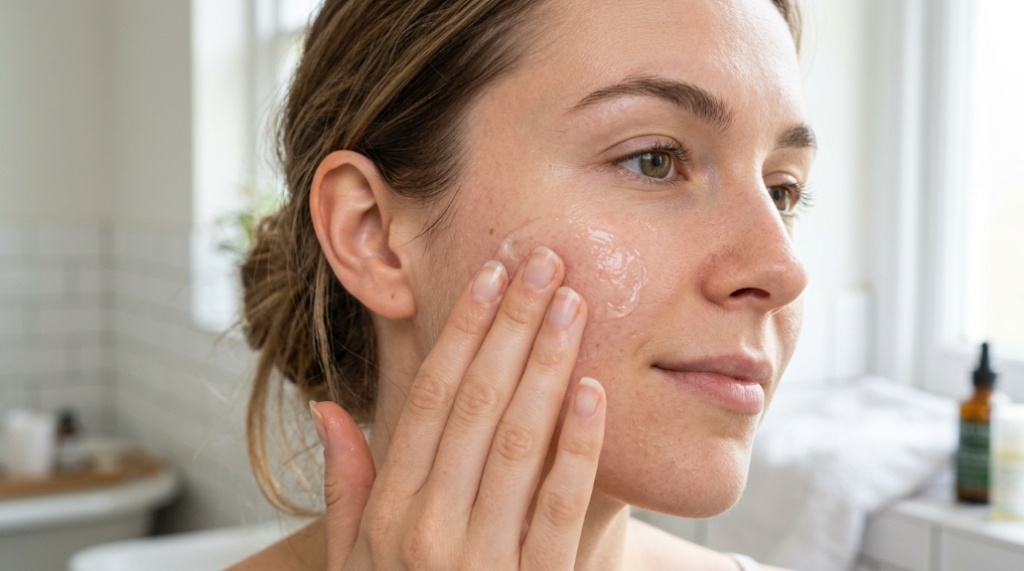
- Start with once a week at night. Cleanse, wait until skin is fully dry, then apply the toner with a cotton pad or fingertips. Dry skin reduces stinging.
- Follow with a simple moisturizer. Skip serums, essences, and actives on this night. Keep it minimal.
- Do not apply anything else exfoliating for 48 hours. That includes scrubs, cleansing brushes, and other acid products.
- Wear sunscreen every morning. AHAs increase photosensitivity. This is not optional, especially in cities where UV reflects off glass and pavement.
- Increase to twice a week only if skin is calm. If there is no stinging, flaking, or unusual redness after three weeks, you can add a second night.
Three times per week is generally the upper limit for most people using a leave-on AHA toner. Beyond that, you are usually trading barrier health for marginal gains.
Common Mistakes That Cause More Harm Than Good
Most exfoliation problems come from a handful of predictable errors.
- Layering acids with retinoids on the same night. Both accelerate cell turnover. Together, they often overwhelm the barrier. Alternate nights instead.
- Using glycolic acid in the morning. It increases sun sensitivity, and morning routines usually include vitamin C, which can be irritating when combined with AHAs.
- Exfoliating to fix flaking. Flaking is often a sign the barrier is already compromised. Adding more acid makes it worse.
- Assuming “natural” scrubs are gentler. Walnut shell and sugar scrubs can be more abrasive than a well-formulated acid toner.
- Ignoring seasonal shifts. Skin that tolerates twice-weekly exfoliation in humid summer may need once-weekly in dry winter air.
Adjusting Frequency to Your Environment and Skin Type
Urban environments add variables that a generic routine does not account for. Pollution particles, humidity swings, air conditioning, and indoor heating all affect how much stress skin is already under.
If you commute through heavy traffic, work in a dry office, or wear makeup most days, your skin is already being challenged. That usually means less exfoliation, not more. Conversely, if you live in a humid climate and have oily, resilient skin, twice-weekly use may feel comfortable year-round.
Oily and combination skin generally tolerates glycolic acid better than dry or sensitive skin. Rosacea-prone, eczema-prone, and recently treated skin (post-peel, post-laser) should avoid AHAs until cleared by a dermatologist, For more industry insights, check out our guide on sustainable practices in skincare and haircare manufacturing.
When to Stop and Reassess
Stop exfoliating and simplify your routine if you notice any of the following lasting more than a day or two:
- Stinging or burning when applying moisturizer that previously felt fine
- Persistent redness, especially across the cheeks and nose
- Flaking or tightness that does not resolve with moisturizer
- New breakouts appearing in areas that were previously clear
- Increased sensitivity to products you have used for months
Recovery usually means a week or two of gentle cleansing, moisturizer, and sunscreen — nothing else. Once skin is calm, reintroduce actives one at a time, starting at the lowest frequency.
Frequently Asked Questions
Can I use glycolic acid toner every day?
For most people, no. Daily use of a leave-on AHA increases the risk of barrier damage, persistent redness, and sensitivity. Two to three times per week is a more sustainable frequency for the majority of skin types.
Should glycolic acid be used in the morning or at night?
At night. Glycolic acid increases photosensitivity, so applying it in the evening gives skin time to recover before sun exposure. Morning use also conflicts with vitamin C and other actives commonly used in daytime routines.
Can I use glycolic acid with retinol?
Not on the same night for most people. Both accelerate cell turnover, and combining them often causes irritation. Alternate nights — for example, glycolic acid on Monday and Thursday, retinol on Tuesday and Friday — and adjust based on how skin responds.
Does glycolic acid help with acne?
It can help with surface texture and mild clogging, but salicylic acid (a BHA) is generally more effective for acne because it penetrates oil-filled pores. Glycolic acid is better suited to dullness, uneven tone, and rough texture.
How long before I see results?
Surface smoothing and brightness are often noticeable within two to four weeks of consistent, moderate use. Improvements in tone and texture typically take longer, and results depend heavily on sun protection and overall routine consistency.
Is glycolic acid safe for sensitive skin?
It depends on the individual. Sensitive skin often tolerates gentler AHAs like lactic acid or mandelic acid better. If you have rosacea, eczema, or a compromised barrier, consult a dermatologist before starting glycolic acid.
Conclusion
Exfoliation is not a step to maximize — it is a step to calibrate. Glycolic acid toner can meaningfully improve texture and brightness when used two to three times per week at night, paired with moisturizer and daily sunscreen. The real skill is knowing when to slow down. If skin is calm, consistent, and comfortable, your routine is working. If it is stinging, flaking, or reactive, the answer is almost always less, not more. Start low, stay consistent, and adjust with the seasons rather than the marketing.


